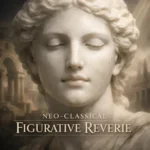
Neo-Classical Figurative Reverie
Buy original neo classical figurative canvas 1/1
Reviving the anatomical precision of the Renaissance through a lens of contemporary psychological complexity, this collection transcends mere homage to antiquity. These 1/1 exclusive digital masterpieces utilize the human form—draped and unadorned—not as unattainable idols, but as vessels for profound philosophical inquiry and silent vulnerability.
“We do not merely observe the classical form; we confront the weight of its history and the fragility of its modern existence.”
Crafted with meticulous digital brushwork that echoes centuries of classical discipline, each monumental canvas invites deep contemplation. Designed specifically for discerning collectors, this series captures the tension between historical grandeur and intimate human connection.
Vespers of the Fallen Titan
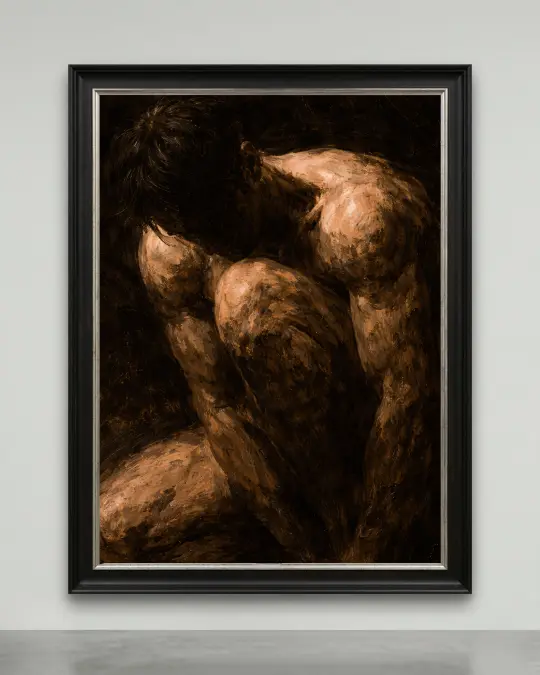
In the quiet depths of a dimly lit mahogany study, surrounded by leather-bound tomes and the scent of aged paper, “Vespers of the Fallen Titan” finds its true home. This piece is a profound exploration of Neo-Classical Figurative Reverie, drawing heavy inspiration from the brooding, existential weight found in the literary works of Dostoevsky and the tragic heroes of Greek myth. The figure, carved from shadow and rendered in striking, earthy bronze tones, captures a solitary moment of introspection—a titan caught in the quiet vulnerability of his own thoughts.
Through MCE Gallery’s meticulous “Transparent Artification” process, this masterwork transcends the digital realm. Every aggressive, impasto-like brushstroke and subtle gradient of chiaroscuro has been thoughtfully materialized onto a museum-grade, archival physical canvas. The texture evokes the raw, tactile nature of classical oil paintings, offering a profound sensory and emotional luxury.
As a 1/1 exclusive neo classical figurative canvas, ownership of this piece is a solitary privilege. It is not merely a work of art, but an intellectual heirloom. Designed to command the atmosphere of a luxury estate’s library, a private executive office, or a grand hallway, “Vespers of the Fallen Titan” bestows an aura of prestige, melancholy, and undeniable power upon its surrounding space. It awaits the single patron who understands the profound weight of true exclusivity.
Echoes of the Umber Reverie
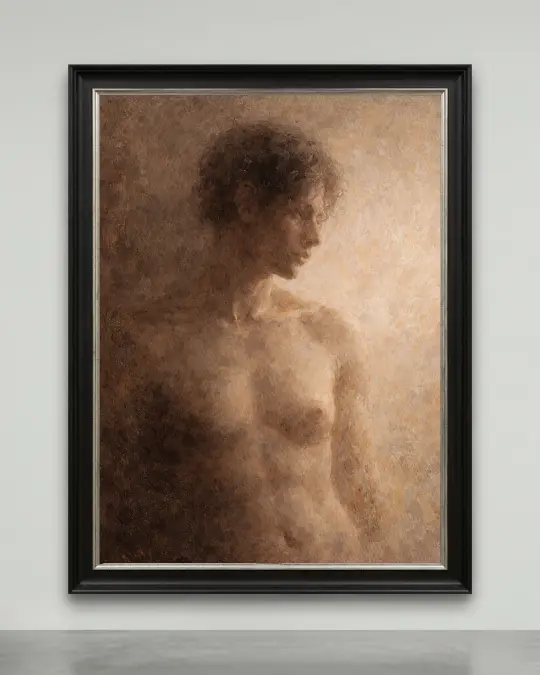
In the quiet solitude of a dimly lit study, where the scent of aged leather intertwines with the whispers of antiquity, “Echoes of the Umber Reverie” finds its true sanctuary. This masterpiece is a profound exploration of the classical human form, emerging from the depths of profound shadows into a solitary, melancholic light. Inspired by the philosophical weight of the Dark Academia aesthetic and the historical mastery of chiaroscuro techniques, the artwork invites the discerning collector into an intimate dialogue between presence and absence.
Through our rigorous “Transparent Artification” process, the ethereal digital brushstrokes have been meticulously immortalized onto a tactile, museum-grade physical canvas. Every impasto texture and sepia-toned nuance is preserved, ensuring that this buy exclusive chiaroscuro figurative canvas 1/1 piece radiates a profound sensory luxury. The heavy, textured application of umber and gold tones creates a visceral depth, echoing the grand masters while retaining a distinctly modern, enigmatic soul.
Designed strictly as a 1/1 Exclusive Edition, this artwork guarantees absolute singularity for its sole custodian. It is not merely a visual acquisition; it is an intellectual heirloom. Envision “Echoes of the Umber Reverie” commanding the space above a mahogany mantle in a private library, or serving as the contemplative centerpiece in a high-net-worth individual’s executive office. It stands as a testament to profound aesthetic curation, waiting to reflect the sophisticated melancholy and intellectual depth of its singular owner.
Sepulchral Grace of the Silent Muse
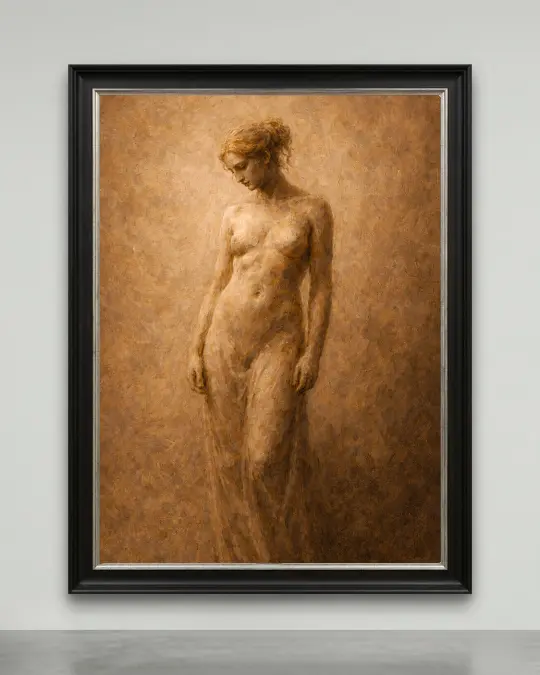
In Sepulchral Grace of the Silent Muse, the human form emerges not as an object of desire, but as a vessel of introspection—an echo of antiquity suspended in a moment of eternal quietude. The figure, rendered in a subdued sepia tonality, evokes the ghost of classical sculpture softened by time, memory, and the erosion of certainty. Her downward gaze refuses the viewer, inviting instead a contemplative solitude—an inward descent rather than outward admiration.
Drawing from the philosophical lineage of Neo-Classical aesthetics, the composition balances anatomical precision with emotional ambiguity. The body is neither idealized nor diminished; it exists in a fragile equilibrium between presence and disappearance. This is “Transparent Artification”—a process through which the artwork reveals its constructed nature while simultaneously dissolving into atmosphere, allowing the collector to project their own narrative onto its surface.
Within a dimly lit library, a private study, or a grand yet restrained salon, this piece becomes more than décor—it becomes a silent interlocutor. It absorbs ambient light, deepens shadows, and anchors the intellectual gravity of the space. The tactile illusion of the canvas enhances its physicality, making it not merely seen, but felt.
For the discerning collector, this is not simply a visual acquisition—it is a philosophical possession.
The Quiet Burden of Being
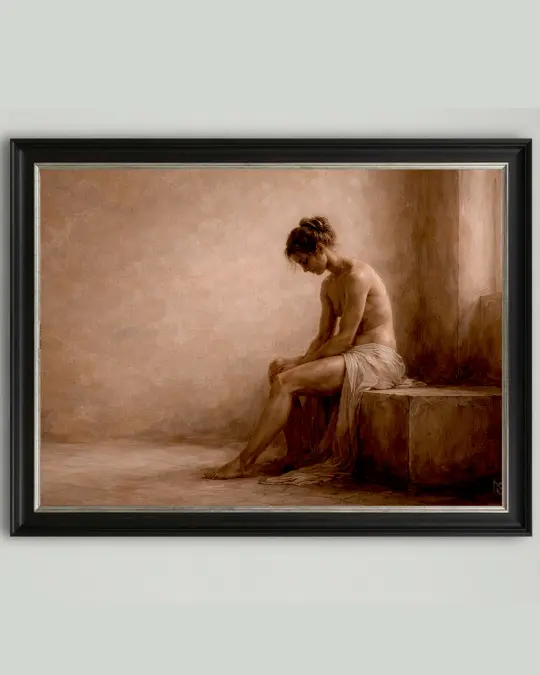
In The Quiet Burden of Being, the human form becomes both relic and revelation—an echo of antiquity rendered through the softened lens of introspection. Rooted in the aesthetic lineage of neoclassical restraint, the figure does not perform for the viewer; instead, he withdraws, collapsing inward under the silent gravity of existence itself. His posture—neither heroic nor defeated—suggests a moment suspended between memory and becoming.
This work emerges from MCE Gallery’s meticulous Transparent Artification process, where classical anatomical harmony is deliberately softened through tonal diffusion and textural erosion. The result is not a replication of the past, but a philosophical reawakening—where marble becomes flesh, and flesh becomes thought. Every nuance is translated onto a museum-grade physical canvas with tactile richness and emotional depth.
The palette—muted ochres, dusted siennas, and fading umbers—invokes the atmosphere of an old European atelier, where time lingers in the walls. When placed within a dimly lit library, a private study, or a curated living space, this 1/1 exclusive neo-classical canvas does not dominate—it permeates. It invites contemplation, rewards stillness, and offers collectors an artwork defined by presence, fragility, and the unspoken poetry of being.
The Burden of Silence
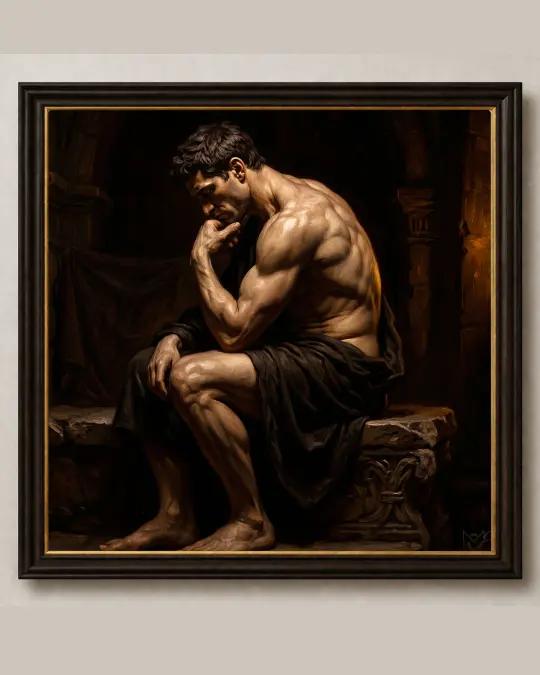
In “The Burden of Silence,” the human form becomes a vessel of unspoken thought—a meditation suspended between intellect and corporeality. Rooted in the traditions of neo-classical figurative reverie, the composition evokes the philosophical solitude of antiquity, where thinkers bore the weight of existence not through action, but through contemplation.
The figure, sculpted in chiaroscuro tension, embodies the silent discourse between flesh and mind. His posture—contracted yet dignified—recalls the existential gravity found in forgotten marble statues, yet rendered here through a modern lens of emotional realism. This is not merely anatomy; it is introspection made visible.
Through our proprietary Transparent Artification™ process, the artwork is translated into a museum-grade rolled canvas, preserving every nuance of shadow, muscle tension, and painterly depth. The result is a tactile illusion of oil on canvas—an object that breathes with intellectual presence.
Designed for interiors that demand narrative depth—private libraries, executive studies, or dimly lit salons—this piece anchors the room in contemplative stillness. It does not seek attention; it commands reflection.
For the collector who values silence as a form of power, this is not decoration—it is a philosophical statement.